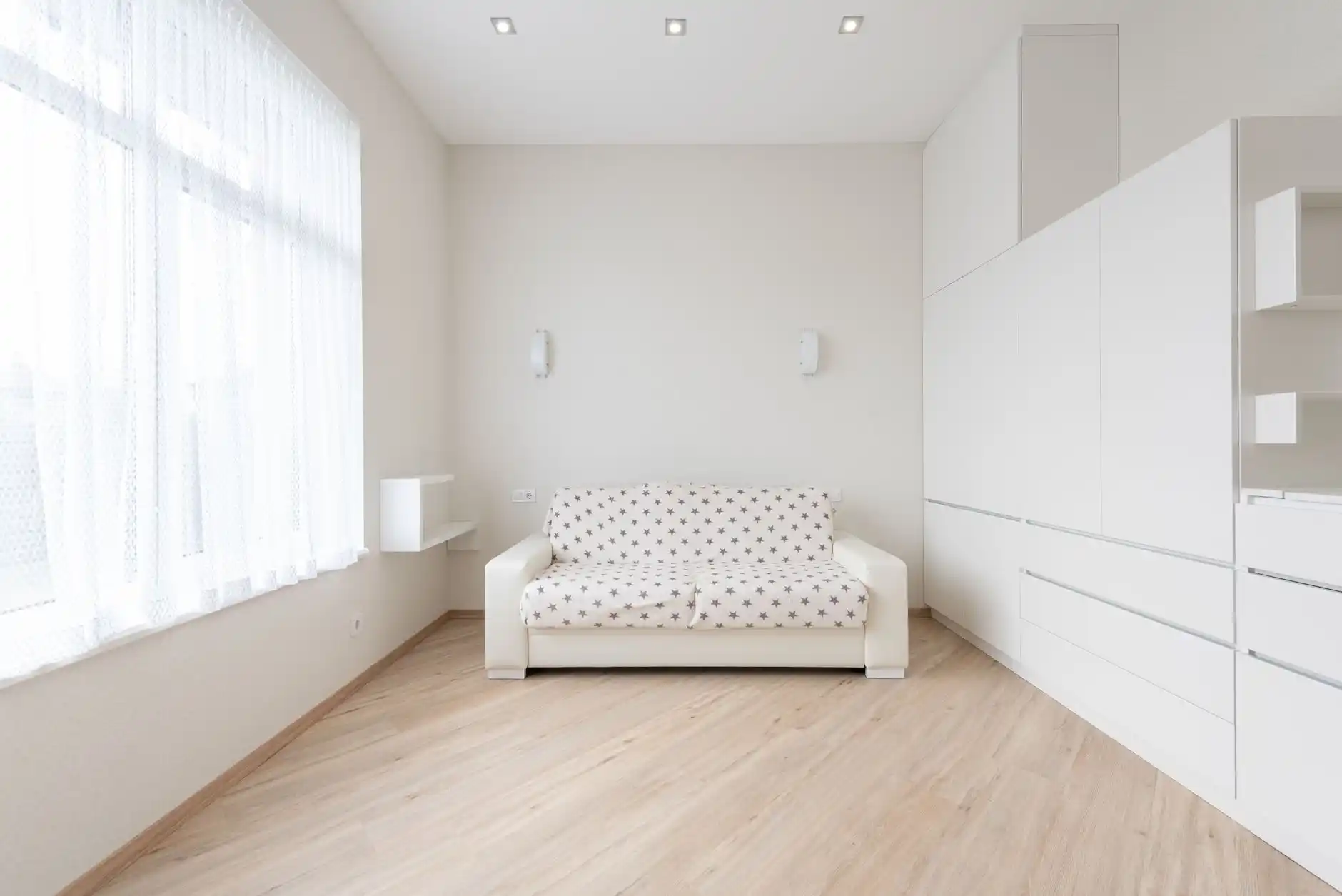
Light ash feels cold when everything around it is equally pale and equally smooth. The fix is not a darker floor but contrast: one mid or dark tone, some warmth in the walls or fabrics, and a single confident color. With those three, a pale ash floor feels airy and calm instead of chilly.
Ash is the floor people choose for light. Shown in Firnie as #D8C8A7, it is a soft straw tone with fine streaks that bounce daylight around and make compact rooms feel wider. That same lightness is the risk. Pair ash with white walls, white furniture and cool bulbs, and the room starts to look like a gallery waiting for its exhibition.
These notes cover what makes a pale floor read as cold, and the small moves that change it.
Where the chill comes from
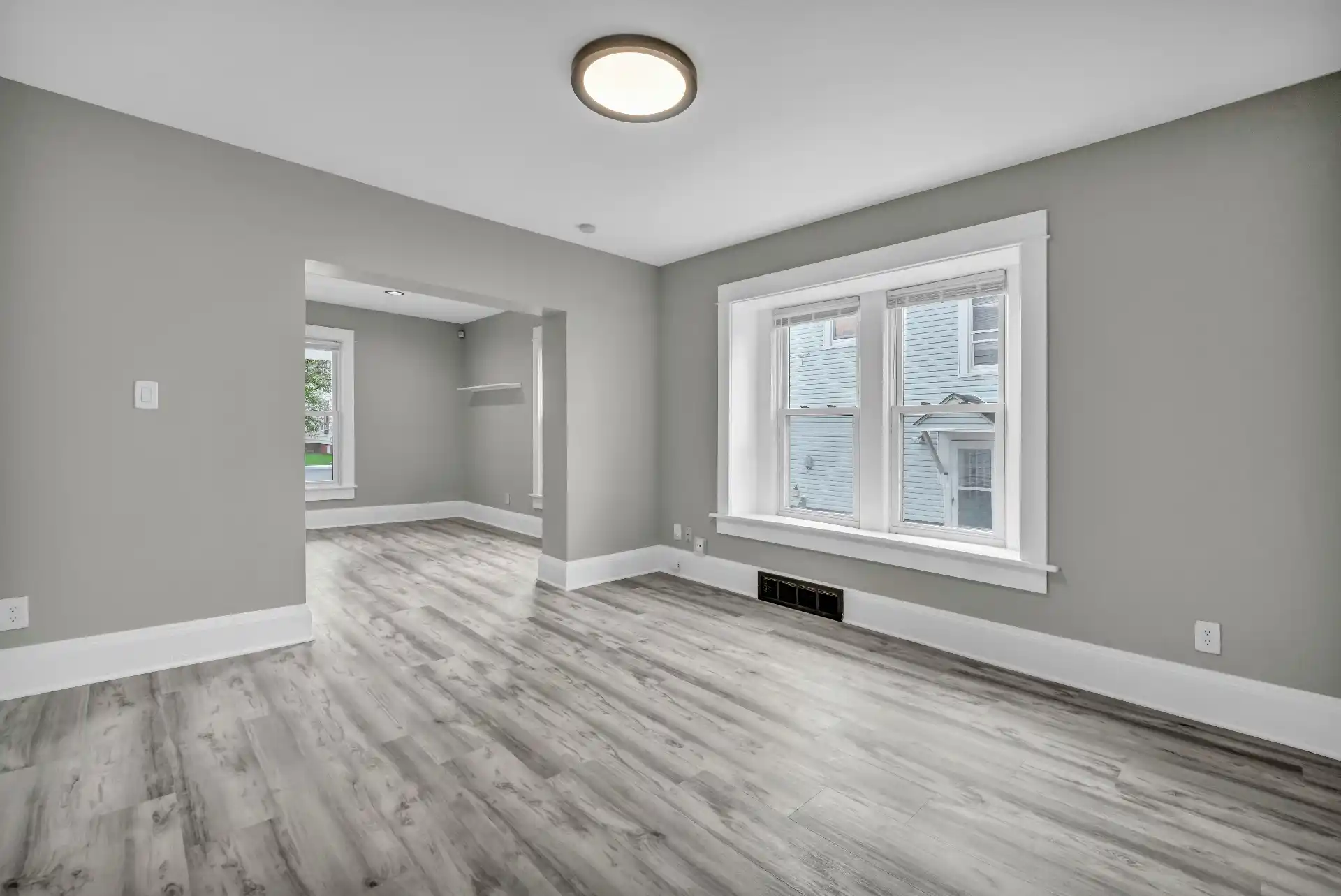
Coldness in a light room is rarely about the floor itself. Ash has a gentle warmth in it. The problem is sameness: when floor, walls and furniture all sit at a similar lightness, the eye finds nothing to hold. Add cool daylight from a north window and the whole space drifts toward gray.
So think in terms of depth, not hue. A room needs a range of values, from light to dark, to feel lived in. Ash supplies the light end. Your job is to supply the rest.
Pick walls with a whisper of warmth
On light ash, warm white gives a soft, clean envelope with just enough cream to keep the floor from looking bleached. Soft gray reads more architectural and pairs beautifully with ash, but in a cool-lit room it needs warm textiles to stay friendly.
Pale on pale, done right
If you want both floor and walls very light, make sure they differ slightly in temperature or texture. A warm white wall over ash works because the two are near each other without being identical. Two cool pales side by side tend to flatten.
Let the baseboard draw a line
Where a pale floor meets a pale wall, the junction can disappear and the room loses its edges. A baseboard painted a shade deeper than the wall, or left in a wood tone, draws a quiet line around the room. It is a small detail that gives a light scheme some structure.
Bring in one darker anchor
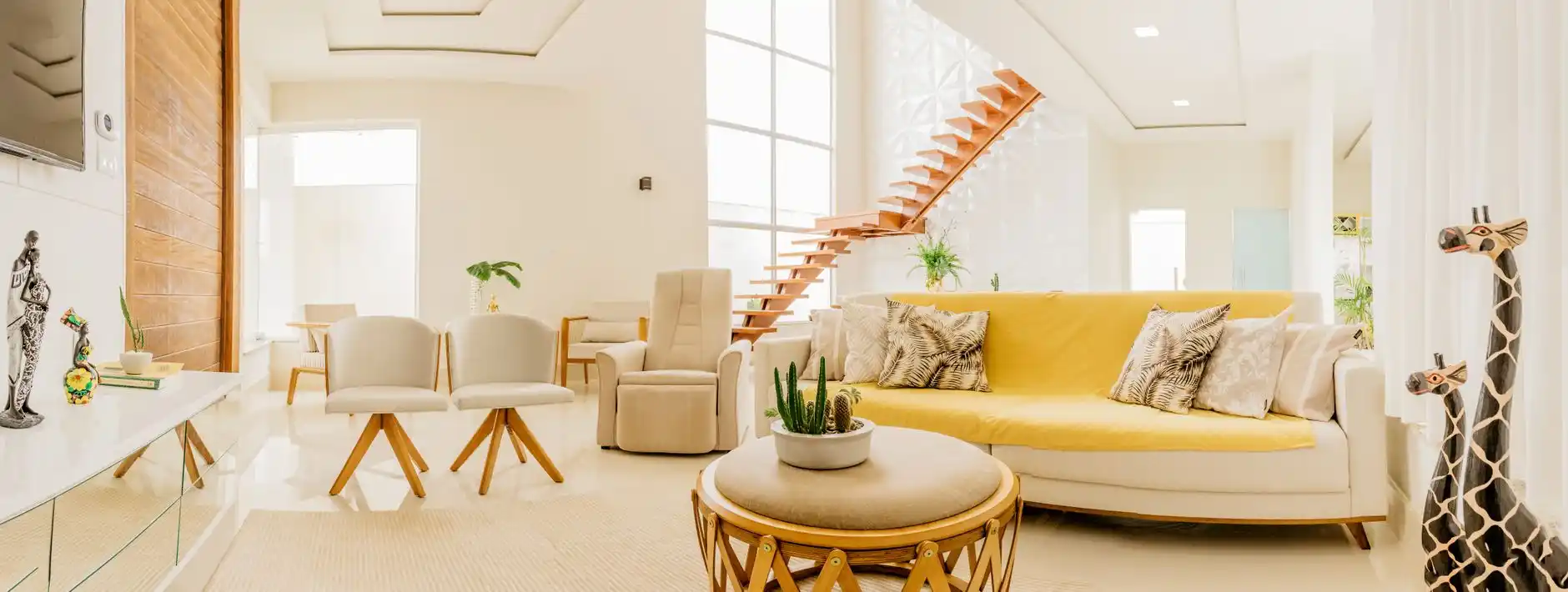
A pale floor needs at least one darker element to set the scale of the room. It can be small: a graphite side table, a dark picture frame, a black lamp base, a wooden chair in a deeper stain. Put it where the eye naturally lands, near a seating group or at the end of a sightline.
- One dark piece per zone is usually enough.
- Matte dark finishes feel calmer than glossy ones on a light floor.
- Repeat the dark note once elsewhere so it looks intentional.
Add a single clear color
Ash can look washed out with only neutrals. A single saturated piece, such as the blue accent direction, gives the room a focal point and makes the pale floor look fresher by comparison. This is the logic behind Quiet Workday: pale ash, warm white walls and one blue note.
Why blue and not another hue
Blue holds its own against pale wood without overwhelming it, and it stays readable in cool daylight. Warmer accents work too, but they tend to blend with ash's straw tone rather than stand out. For more on keeping blue friendly, read Using blue at home without it feeling cold.
Warmth through touch, not paint
Some of the warmth a pale room needs comes through the hand rather than the eye. Wool throws, a nubby cushion, a woven basket, a wooden bowl with visible grain: each adds a small warm signal. If you are tempted to repaint because the room feels cold, try adding three tactile pieces first. The live post Texture before color goes deeper on this.
Evening is the real test for ash
By day, a pale floor carries a room on its own. After dark, it can look grayish and flat under a single ceiling light, and that is when most people decide the room feels cold. Two or three lamps placed low and at the sides bring out the grain and give the floor some warmth back.
Curtains matter too. Unlined white panels over black windows add to the chill; a fabric with a little color or weave closes the room in gently. None of this changes the floor, yet it changes how the floor feels at eight in the evening.
Preview Quiet Workday on your own floor
Load Quiet Workday in the Studio with ash, warm white and blue accent. Then swap the furniture to graphite to see how a darker anchor changes the temperature of the room. Upload a photo of your space if you have one, and save the version that feels warmest without losing light. Browse the full Quiet Workday story for more ideas.
FAQ
Do light ash floors make a room feel cold?
They can when everything else is equally pale and cool. Ash itself has a soft warmth. Adding one darker anchor, warm textiles and a single accent color usually solves the issue.
What wall color looks best over a light ash floor?
Warm white is the easiest match because its slight cream keeps ash from looking bleached. Soft gray suits more tailored rooms but benefits from warm fabrics. Very cool whites can make pale wood look gray.
Should furniture be darker than a light ash floor?
At least one piece should be. A darker element gives the room depth and scale. The rest can stay light if you prefer an airy look.
Is light ash a good floor for a north-facing room?
It helps by reflecting the available light, but cool daylight can make the room feel flat. Balance it with warm wall tones, textured fabrics and lamps with a warm color.
Can light ash work in a traditional room?
Yes. Pair it with warmer walls, wood furniture in a deeper tone and classic shapes. The pale floor will freshen the room without making it look modern by default.