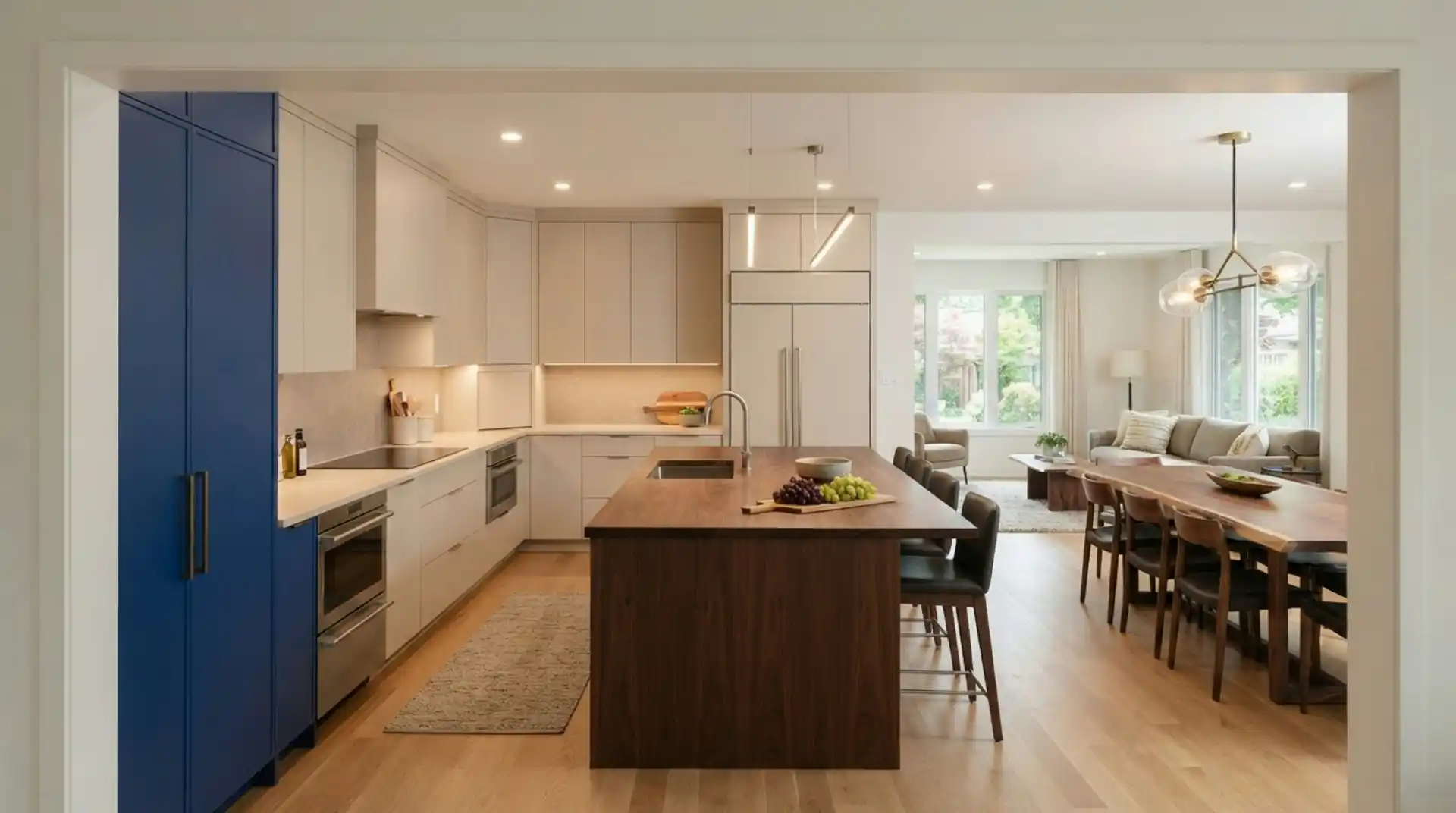
The best wall color for dark walnut floors is a light, slightly warm white. A dark floor swallows a lot of the light that reaches it, so the walls have to do the reflecting. Warm white returns that light without looking stark against chocolate-toned wood. If the room is used mostly at night, deep blue is the confident alternative.
Walnut gives a room gravity. Shown in Firnie as #70503B, it is the darkest of the three floors and the one that changes a room's brightness most. Pick the wrong wall and the space feels lower, smaller and a little tired by late afternoon. Pick well and the floor reads as a rich base that makes everything above it look lighter.
What follows is a plan built around one idea: with a dark floor, the walls and ceiling are your light source.
How a dark floor shifts the balance
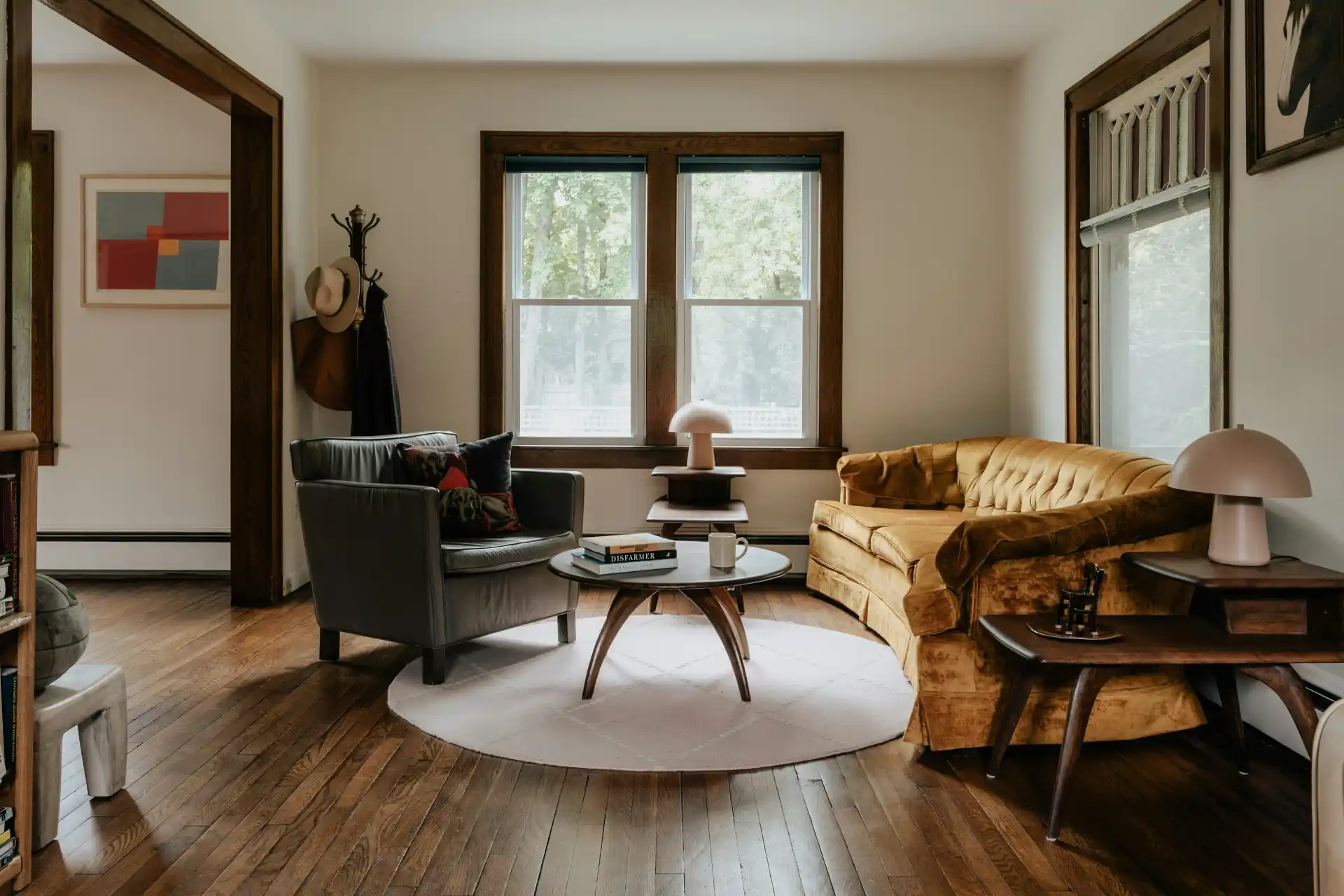
In a room with a pale floor, light bounces up from below and spreads evenly. Walnut breaks that loop. The lower part of the room goes quiet, and the eye looks to the walls for brightness. That is why the gap in value between floor and walls matters more here than the exact hue.
A strong difference in lightness feels crisp and open. A small difference feels enclosed. Neither is wrong, but you should choose it on purpose. For a broader look at the role of daylight direction, see Start with the light.
Warm white for maximum lift
Warm white (#EAE7DF) sits at the bright end of the scale, so against dark walnut it creates the widest contrast in the Firnie set. The warmth in the white echoes the brown of the wood, so the jump feels friendly rather than harsh.
Avoiding the stark-white trap
A cool, blue-tinged white above walnut tends to look clinical and makes the floor look even darker. Keep a hint of warmth in the wall and repeat it in fabrics. The Warm Library palette on the palettes page pairs walnut with warm white and linen for exactly this reason.
Soft gray and other mid-tones
A mid-value wall, such as soft gray, narrows the contrast. Over walnut that can look sophisticated in a bright room and heavy in a dim one. If you love gray, keep it on the light side, use it in rooms with generous windows and bring pale textiles in to break up the middle of the room.
Going dark on purpose: deep blue above walnut
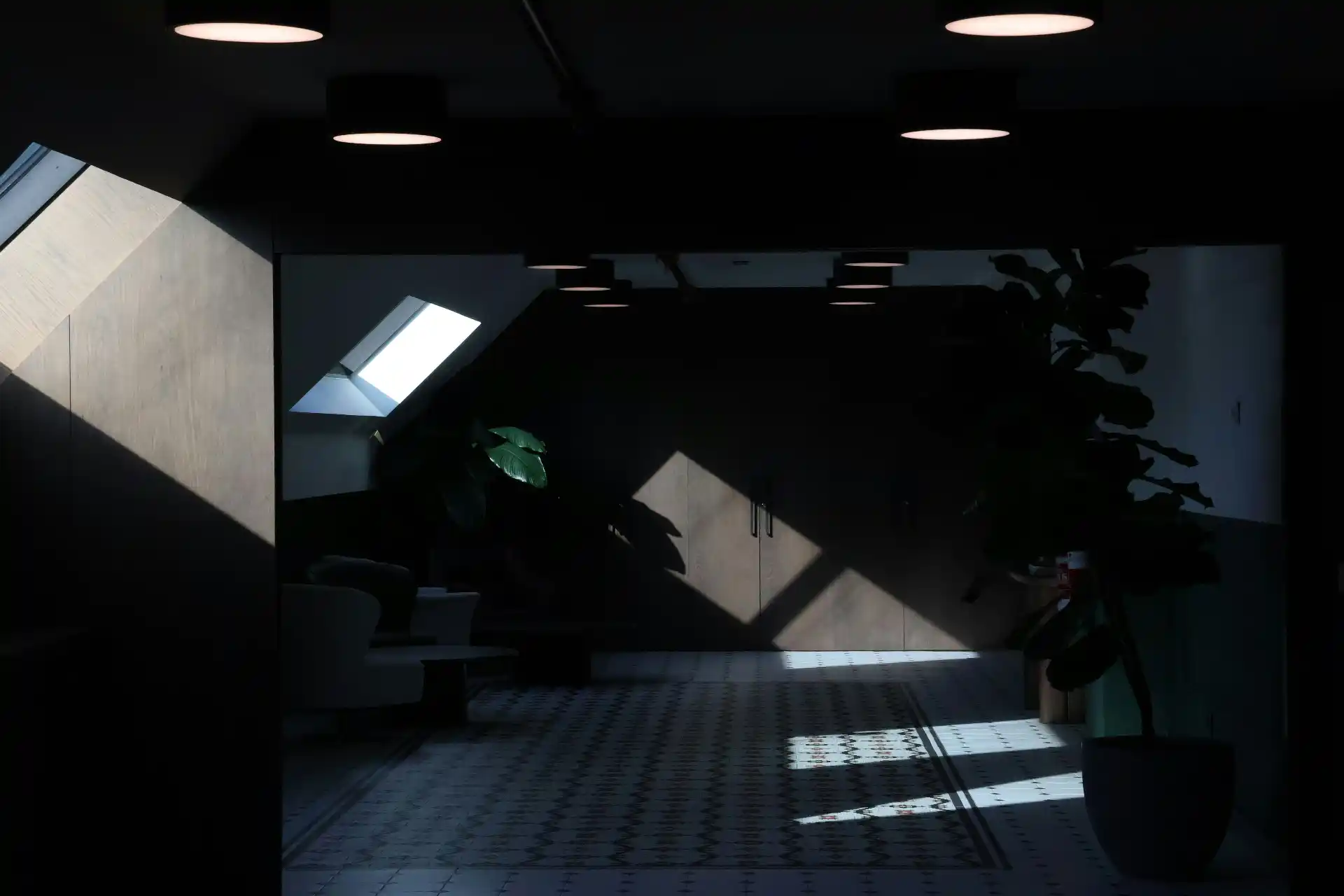
Sometimes the right move is to stop chasing brightness. Deep blue walls over walnut create an enveloping, evening room: the wood warms the blue, the blue deepens the wood. This is the Blue Hour combination, and it works best in dens, dining rooms and bedrooms where you spend more time after sunset than before it.
What a dark-on-dark room needs
The pairing only works with relief. Pale linen upholstery, a light rug or cream curtains stop floor and walls from merging into one dark mass. Plan lamps at several heights, because overhead light alone will flatten the scene. You can explore the full story in Blue Hour.
Match the wall to your walnut's undertone
Walnut is not one color. Some boards lean red, some lean toward cool gray-brown, and many floors sold as walnut are stained oak with a tone of their own. The undertone decides which white will feel natural above it.
- Red-leaning walnut: a white with a soft, neutral base avoids turning the room pink.
- Gray-brown walnut: a creamier warm white adds the warmth the floor holds back.
- Stained oak in a walnut shade: look at the grain under the stain; amber showing through behaves more like oak.
Check the floor beside your sample in the daylight you actually have. If the white looks dirty next to the boards, it is too close in undertone; step one shade cleaner.
Ceiling, rugs and the middle of the room
With a walnut floor, the ceiling is the largest light-reflecting surface you control. Keep it the lightest plane in the room. Between floor and walls, a rug lighter than the wood breaks the dark field and reflects light upward. Wall art with pale mats or light frames adds small bright points at eye level.
- Keep the ceiling lighter than the walls.
- Break the floor with one large pale surface.
- Add reflective points at eye level: mirrors, glass, light frames.
A walnut floor also rewards a little extra care with window treatments. Sheer or light curtains let more daylight reach the walls, which is where a dark-floored room gets its brightness.
Compare bright and moody in one session
Open walnut with deep blue walls and linen, then switch the wall to warm white and watch how the room's weight shifts. Toggle back and forth a few times; the difference is easier to judge in motion than from memory. Save the concept you prefer so the codes stay with you.
FAQ
Do dark walnut floors make a room look smaller?
They can, especially when walls are also mid-toned or dark. Light walls and a light ceiling create contrast that makes the room feel more open. In a large room the visual weight of walnut often feels grounding rather than shrinking.
Can I use gray walls with dark walnut flooring?
Yes, but keep the gray light and use it where daylight is generous. A darker gray above walnut lowers contrast and can make the room feel dull. Pale textiles help the pairing breathe.
Is deep blue too dark for a walnut floor?
Not if the room is used mainly in the evening and has pale furniture or fabric for relief. Without that contrast, the walls and floor can blur together. Plan several lamps rather than one overhead fixture.
What furniture color suits walnut floors and light walls?
Pale, natural tones such as linen keep the room soft and bright. A few graphite pieces add structure if you want a crisper look. A saturated blue piece works as a single accent.
Do dark walnut floors suit a room with little daylight?
They can, but the walls and ceiling need to stay light and the lighting plan has to be generous. In a dim room, treat walnut as the single dark surface. Adding dark walls as well usually makes the space feel closed-in.