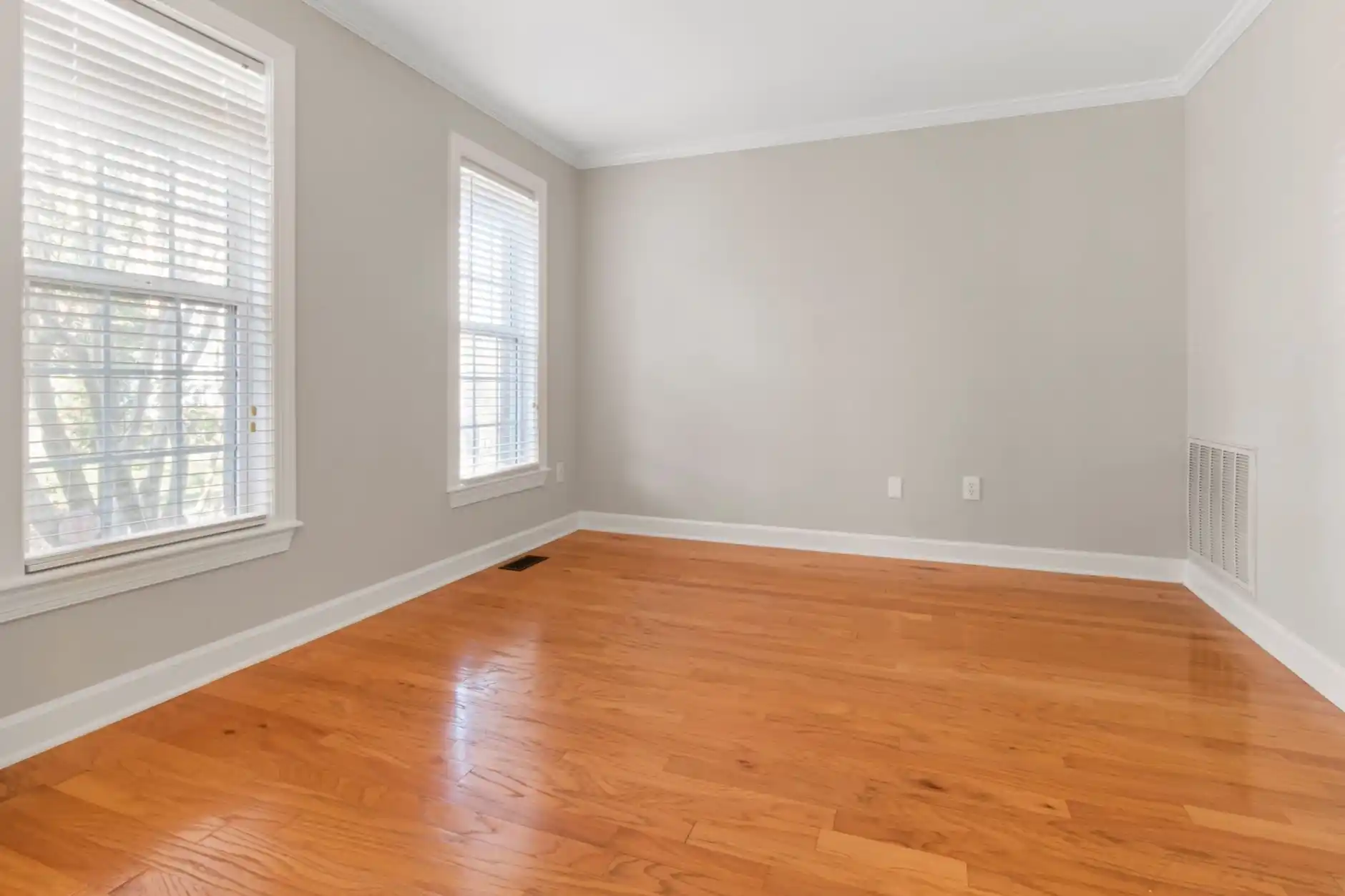
Warm white is the most reliable wall color for natural oak floors. It shares the floor's soft, yellow-leaning warmth without competing with it, so the grain stays visible and the room reads bright. If you want a cooler, more tailored look, a soft gray with a neutral base works well. For contrast, a dusty deep blue makes oak glow.
Oak is the forgiving floor. Its honey tone sits in the middle of the wood range, neither pale nor dark, which is why it gets along with so many palettes. That flexibility is also the trap: because almost anything works, people pick a wall color in isolation and only later notice the floor looks orange, flat or busy.
This guide narrows the choice to three directions and explains what each one does to the floor below it. If you are still deciding between wood species, start with our comparison of oak, ash and walnut and come back here.
Why oak changes the wall above it
Natural oak, shown in Firnie as #BB9063, carries a clear amber undertone. Daylight bounces off the floor and onto the lower half of every wall, so whatever you paint picks up a faint warm cast near the skirting. A neutral that looks crisp on a chip can turn creamy in the room, and a gray can drift toward beige.
Plan for that reflected warmth rather than fighting it. The question is not which color is correct, but how much warmth you want the room to hold in total. Floor plus walls plus furniture should add up to a level you are comfortable with on a gray afternoon.
Warm white: the easy partner
Warm white (#EAE7DF) is the low-risk choice. It has enough softness to sit kindly with amber wood, yet it stays light enough to lift the ceiling height visually. The floor becomes the main event, which suits oak because its grain is the most interesting surface in the room.
When warm white gets too sweet
Warm white over oak, with warm bulbs at night, can tip into a yellow room. If your oak has an orange-leaning finish, choose the whitest of the warm whites and bring in one cool or dark element: a graphite lamp, a blue cushion, black picture frames. That single cool note keeps the warmth from pooling.
Soft gray: a cooler frame for honey wood
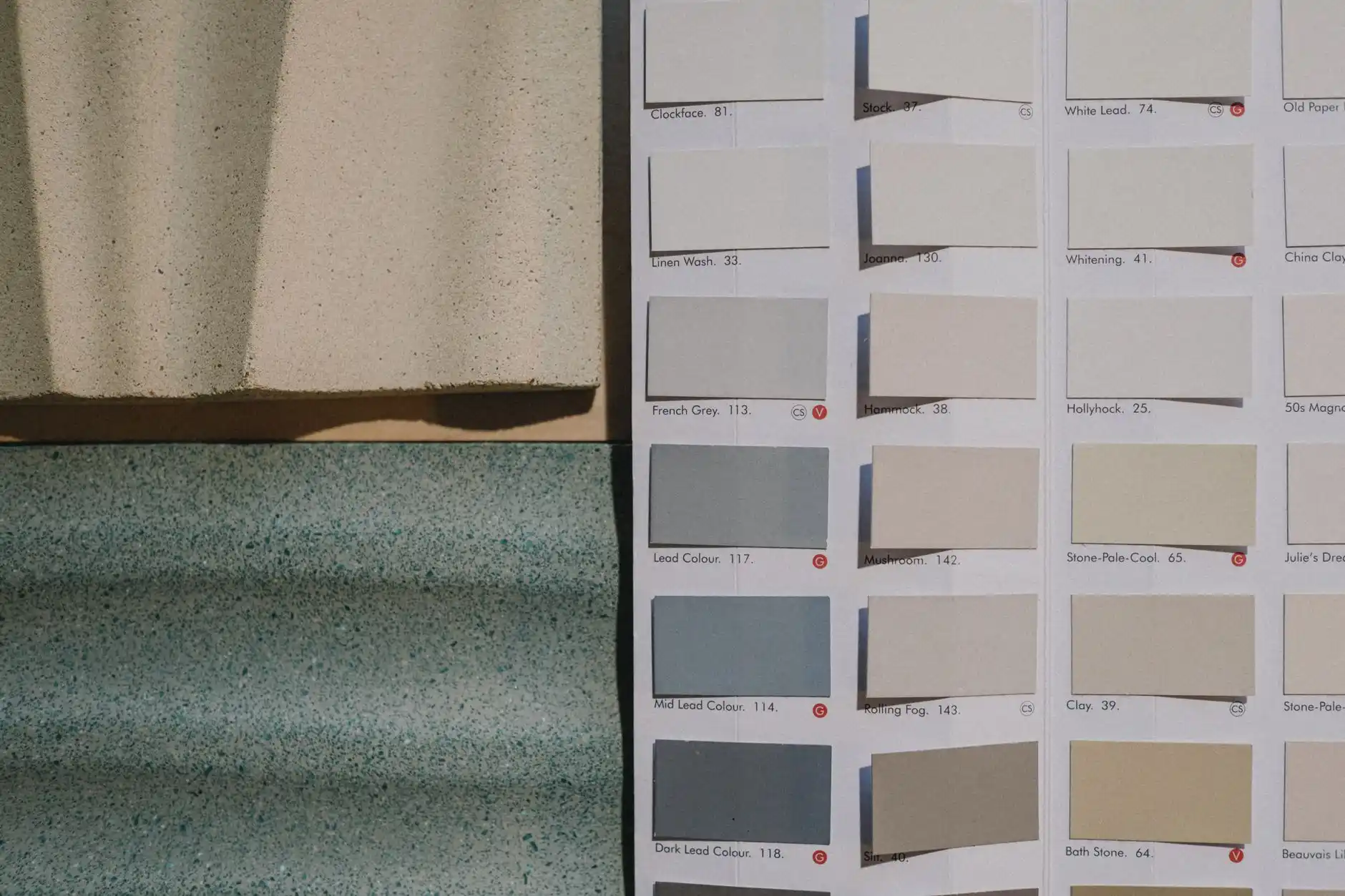
Soft gray (#B6B8BA) sets oak against a quieter, cooler field. The contrast is gentle, but you will feel it: the floor looks warmer and slightly richer, the walls look more composed. This direction suits people who find all-warm rooms a little sleepy.
Picking a gray that does not fight the floor
Avoid grays with a strong blue or green base above oak; the amber floor exaggerates the difference and both start to look off. A gray with a balanced or faintly warm undertone will meet the floor halfway. Keep furniture light or neutral so the room does not drift into gloom.
Deep blue: contrast that makes oak glow
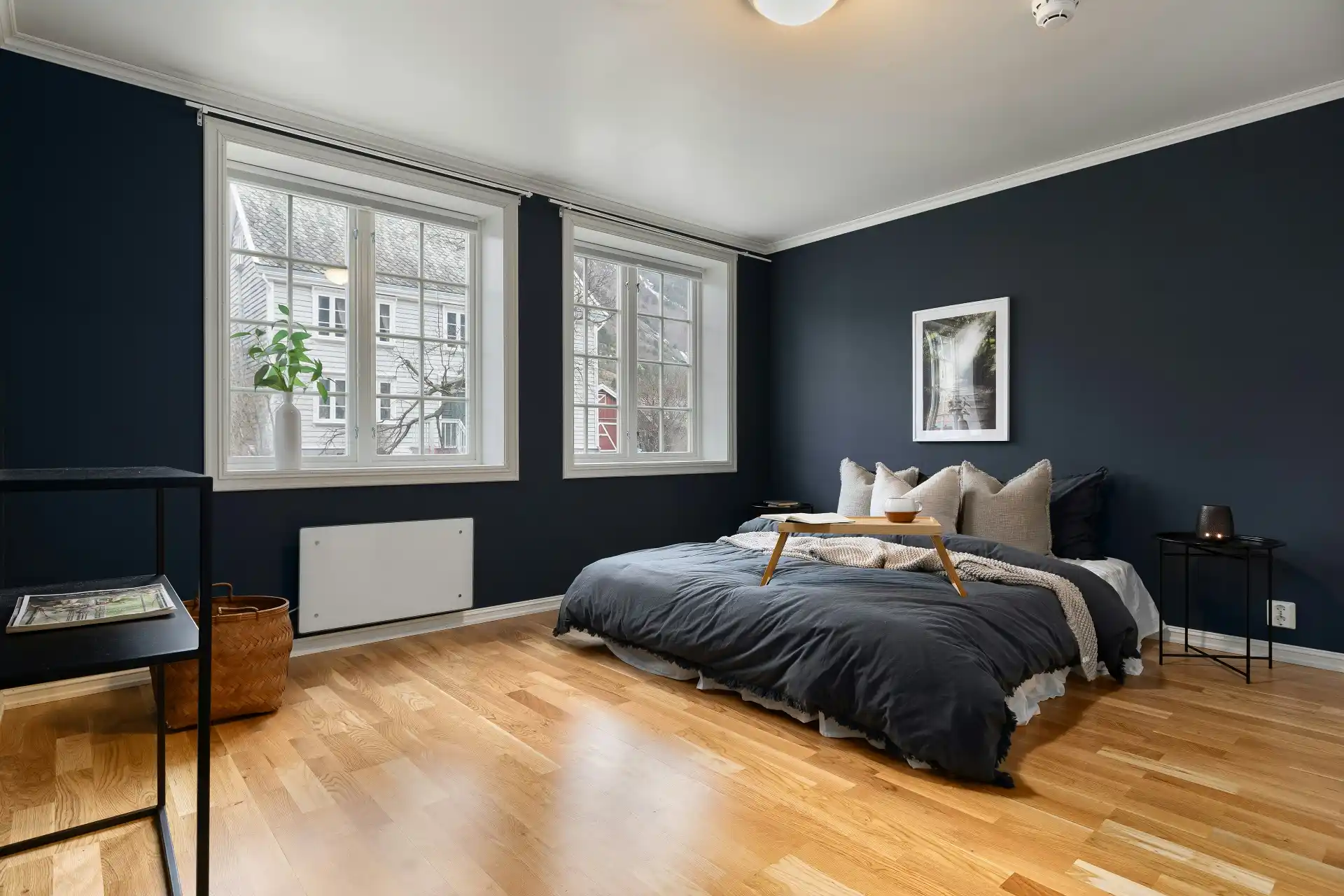
Blue sits opposite orange on the color wheel, so a dusty deep blue wall pushes oak toward gold. It is the most dramatic of the three options and also the most demanding. It works best in rooms with decent daylight or in spaces used mainly in the evening, where a darker envelope feels intentional.
Read your own oak before choosing
Not every oak floor matches the swatch. Older boards often amber with age, some finishes lean pink, and whitewashed or matte-lacquered oak looks paler and grayer. Lay a white sheet of paper on the floor in daylight and compare: the paper makes the undertone obvious within seconds.
- Yellow or golden oak: warm white and balanced grays both sit comfortably.
- Orange or amber oak: lean toward cooler partners, such as a clean gray or blue, to calm the heat.
- Pinkish oak: avoid creamy whites with a peach note; a whiter white looks fresher.
- Pale, limed oak: treat it closer to ash and allow a little more contrast on the walls.
Whatever you find, choose the wall for the floor you actually own, not for the one in the showroom photo.
Matching the furniture to the pair
Once floor and wall are set, furniture decides the mood. With warm white, cozy linen keeps everything tone-on-tone and calm; this is the Soft Landing combination, which you can browse in the Soft Landing story. With soft gray, graphite pieces make the room crisper. With deep blue, linen gives pale relief so the room never closes in.
- Warm white + linen: soft, airy, forgiving.
- Soft gray + graphite: tailored, quiet, more contrast.
- Deep blue + linen: rich, evening-friendly, needs light.
Test the trio before buying paint
The fastest way to compare these directions is side by side. load the oak, warm white and linen preset, then switch only the wall swatch to soft gray and to deep blue while keeping oak underfoot. Upload a photo of your room if you have one; it stays in your browser. Save the version you like as a concept note so the color codes go with you to the paint counter.
FAQ
Do gray walls go with honey oak floors?
Yes, if the gray is soft and not strongly blue. A neutral or faintly warm gray lets the oak look richer without the two colors clashing. Very cool grays tend to make honey wood look orange.
Should walls be lighter or darker than an oak floor?
In most rooms, lighter. Oak is a mid-tone, so a light wall keeps the space open and lets the grain read. A darker wall above oak can work, but it is a deliberate, moodier choice rather than a default.
Is white too plain with oak flooring?
Not when the white has a little warmth and the room has texture. A stark, cool white can make oak look yellow by comparison, while a warm white feels finished and calm.
What accent color works best with natural oak?
Blue is the classic accent because it sits opposite oak's amber on the color wheel. One blue piece, such as a chair or a rug, is usually enough to balance the warmth.
Can oak floors and oak furniture share a room with warm white walls?
Yes, though the room can feel very uniform. Lift it with one contrasting element, such as a darker side table or a blue textile. Warm white then acts as a calm backdrop rather than adding more of the same warmth.